Peg

I do quiet work in a place filled with distracting human noises.  When I’m feeling misophonic, I listen to music.  Lately, one of my favorite bands to “work with” is Steely Dan.

Becker & Fagen

Walter Becker and Donald Fagen.

To an amateur musician-geek, Becker and Fagen are interesting guys.  I’m not an eloquent music writer, but Stephen Thomas Erlewine at Allmusic is,  and he sums them up nicely.

Steely Dan created a sophisticated, distinctive sound with accessible melodic hooks, complex harmonies and time signatures, and a devotion to the recording studio.

One of my favorite and most popular Dan songs is Peg.  The happy mood, lively rhythm, and deep layers of harmony and texture wash over my mind and get into all the little cracks.  I can work or I can listen.  And when I listen, the song continues to amaze me.

I enjoy musical documentaries too, especially when artists and engineers talk in the recording studio.  So what could be better than breaking down Peg?

Nerdy Stick Comics

Now here’s something refreshingly fun and simple.  It whisks me away to my own pile of hand-drawn comics sitting in a closet somewhere.  Comics drawn when — I was about to say “when times were simpler”, but they really weren’t.  They were just more imaginative.

Wikipedian Protester

iPhone 5

So light! So sleek! Twice the storage of my trusty iPhone 4 (maybe freeing me from the tedium of pruning my music library for syncing)! And I sent my first two Siri texts: the first with no punctuation and the second with an exclamation mark!

The traffic layer of Apple Maps is disappointing.   I live in the Mid-Atlantic region of the US, so I depend on traffic mapping to set my expectations for the long daily commute.   Compared with the fat and colorful stripes in Google Maps, the tiny dashed red lines from Apple don’t seem very informative.

Maybe I’ll get used to it.  Maybe Apple will fix it.

Payment Disaster Averted

I pay the trash company about 30 bucks per quarter. Their little tiny bill arrives on an index card in the mailbox. It’s old school. No online service or itemized bill in an envelope with a colorful flyer and a return envelope.

I always pay promptly through my bank’s online bill-pay service. Just normal every day stuff we all do. Except for today, when I left out the decimal point and nearly paid them $3,105. Good thing I went and looked at my upcoming payment summary before I logged off.

I wonder what would have happened. Maybe they would say, “Sorry, we don’t generate refunds. Our system can only do credits. ” Gee.  Twenty five years of trash service paid in advance. I guess that would be a nice, secure feeling.

Making Rocks

What is it about this… this wonder of science? The peanut butter Rice Krispie treat with chocolate-butterscotch frosting is surely one of the most rich and decadent foods ever created, yet it’s appeal goes beyond mere taste. In my family, it’s a holiday institution.

We’ve always called them Rice Krispie bars. But they’re not bars, they’re not cookies, and they’re not cakes. Some people even call them “treats” but I avoid that term.  Treats are something that dogs swallow without chewing first.    So, I take from the initials RKB and call them Rocks, which is fitting because that’s what they turn into if you let them dry out. They also sit like rocks in your gut if you eat too many and it’s impossible to swallow one without chewing.

The Rock

In this age of health enlightenment, I avoid discussing the chemistry of the Rock with outsiders. The recipe scares some people, even after they’ve declared the taste divine.  There is no mystery, really.  Legend has it that my sister found the recipe on the back of a box of Rice Krispies when she was a kid.   I know at least one other person who has tasted this confection before, and so it can’t be that Mom invented it.  (Which, by the way, is like finding out about Santa Claus way after your friends are already wise to him.)

But still, it’s like laws and sausage:  best not to see how they’re made.

Today, I have made a batch for the Thanksgiving potluck at the office.  I brought them last year, too, and surprised a few people who never tasted this particular recipe.  (Yes, there are many other Rice Krispie treats.  But they are truly just treats: things that fall on the floor for Rover.)  So I’m bringing them again under the premise that I’m a joyful holiday reveller who wants to make merry with my coworkers.  Really, I just want them for myself.  If I can arouse the pleasure centers of a few other brains, fine, but don’t take too many.

So there they sit, stacked on parchment paper in a plastic container, ready to be displayed with all the other piles of food at lunch today.  On the counter in my kitchen, tightly sealed, are the rejects.  These are visually unacceptable for holiday gatherings and so they remain behind.  Too bad.

Oh, and I made a mistake at the grocery store.  Since I can’t translate cup measurements into dry ounces, I bought too much of everything.   On my kitchen countertop lie mountains of Rice Krispies, piles of chocolate and butterscotch chips, barrels of peanut butter, and tankards of corn syrup.

What will I do with all this excess?  Make rocks, I guess.

Inside Out

So I met Carlos at the gym this morning and he showed me some new stuff with one of those stretchy bands. You know, the bouncy rubber tubes with handles at each end. One of the exercises is a bicep curl, where you hold the middle of the band on the floor with your foot and pull up on each of the handles. Easy right?

During the second set, I somehow lifted my foot in the middle of a curl when the band was tightest. The slingshot effect was quite impressive. The tube shot past my face, into the air, and then came down on top of my head. After turning away from me to laugh, Carlos said, “I’ve never seen that happen before.”

Of course, we were working out in the center of the main floor where everyone can see (“putting on a show for the ladies,” as Carlos likes to say) and I felt like a total maroon. But I’m used to that.  And I felt lucky that I wasn’t killed.

It was only a few minutes later that Carlos drew my attention to the logo on my shorts.

“Dude, you’ve got them on inside out.”

It’s all part of the show.

Diver Down

It was the snowiest winter on record in Washington D.C. and I was restless. The familial holiday glow from my Christmas visit to Minnesota had faded and the Vikings lost the NFC Championship game. Summer shimmered in the distance, out of reach. I decided to head south to warm my bones, relax, and maybe find some adventure.

Without too much thought, I settled on Key West as my destination.  A quirky island, Key West is known for Ernest Hemingway, party bars, gay-friendliness, and wandering chickens.   I’d seen many of the sights during a previous visit, so this time I wanted to try some new things.

There was only one hitch: I wasn’t a certified diver and I didn’t have time to get trained before the trip.  But the world always finds a way for tourists to spend their money and I soon discovered the introductory “resort course”.  A resort course is a one-day introduction to scuba diving that would take me from the classroom to the pool to the ocean in one day.  I searched the Internet and picked a dive shop that had several positive reviews: Dive Key West.  One quick phone call, and I was signed up.

As a boy, I watched The Undersea World of Jacques Cousteau on TV with my dad. The divers swam effortlessly over vast ocean landscapes in a silence punctuated only by the sound of exhaled bubbles. By simply donning tanks of air and falling backward off a boat, they could escape Earth’s  gravity and fly free like astronauts.

The reality of my first open water dive was somewhat less tranquil.

I walked into Dive Key West on a cool Thursday morning in early March and was greeted at the counter by a brown-haired girl  who wore shorts, a light blue polo, and flip flops.   She looked like she was about seventeen.  At first, I thought she was just going to handle the paperwork.

“Hi, I’m here for the resort course.”

“You must be Scott.  I’m Lana. I’ll be your instructor today.”

Lana had the relaxed confidence of someone who had introduced many people to the wonders of diving and the sea.  Her voice reminded me of Drew Barrymore; friendly and relaxed.

We talked briefly about how the day would progress: a short overview in the classroom, learning the basics in a swimming pool, then — weather permitting — an open water dive on the reefs to the south.  I watched the mandatory safety video, chuckling at the warning against using drugs when diving (a coffee table with a joint, a cocktail, and pills on it).  Then Lana taught me about the hand signals used to communicate under water: “watch me”, “OK”, “not OK”, “ascend” and “descend”, “look”, and “repeat”.  She saved the most sobering signal for last, making a slicing motion across her throat that meant, “I’m out of air.”

We then loaded heavy steel tanks and mesh bags filled with gear into the truck and drove to a nearby hotel for basic training.  The weather was unusually chill but the water in the pool was warm.   We changed into swimsuits and Lana prepared for the water.

“Let’s do this the easy way,” she said.

Lana took one of the tanks and, with the buoyancy vest and regulator attached, lowered it into the pool.    Then I  jumped in and she steadied the tank while I wiggled into the straps.  Buckled up, ready to go.

Standing in the shallow end of the pool, Lana went over some fundamentals like retrieving and clearing my regulator, and clearing a flooded mask.  Then we swam to the deep end where I learned how to control my buoyancy by pressing buttons on the inflator hose that hung off my left shoulder.  White to go down, red to go up.

“OK, you’re doing fine.  Just swim around now and get used to it.”

As I moved about in the deep end, Lana hovered nearby swimming gently at times or just sitting quietly on the bottom.  The weight of the tank on my back was heavier than I expected but the partially inflated vest seemed to keep it balanced.  My breathing slowed as I began to relax in my new environment. Before long, it was time to go.

“You’re easy,” Lana said with a smile.

“Oh?  Are some people not so easy?”

“We get all kinds.  Some people are fussy or scared.  Some people have trouble learning the basics.  People like you make my day easier.”

I was glad I could make Lana’s day easier.  I was having fun and, although I wasn’t taking anything for granted, I felt comfortable with everything I’d learned so far.

Back at the shop, Lana checked the condition reports and decided to postpone our open water dive. Too windy, she said, and it wouldn’t make for a good first experience. The sea was restless and wouldn’t have me, but my vacation was just getting started so there were other things to do.

Saturday, first thing, I called Dive Key West. A stiff breeze was blowing from the north and no dive boats had left the marina yet. They told me to check back.  Later, air observers reported improved conditions on the reef to the south. Still, it wasn’t a sure thing; no boats had gone out yet. We decided to give it a shot.

We loaded up the truck and I hitched a ride to the marina with an experienced diver from Washington state named Julie. Julie worked for the US Navy and was in Key West for two weeks to train F-18 aviation maintenance technicians. (Nice job, if you can get it.) Julie was also a self-confessed dive junkie and was happy to be getting on the water. “I haven’t been for two weeks and it’s driving me crazy,” she said.

At the marina, we boarded the long white boat and met Captain Steve, who promised to do his best to find us good water. There were about ten people on board including scuba divers, snorkelers, and instructors.   Greg was the dive master for the trip, a young bearded athletic guy with curly hair and a perenially happy face.  Jacqui was tall and slender with blonde hair and beautiful Scandinavian features.  I’d find out later that day that they were a very fun couple.

As the boat moved into open water and picked up speed, the mood on the boat became light and playful. Instructors and the more experienced divers joked around and laughed as we skipped across blue-green waves. The sea looked friendly and inviting. But the experienced divers saw things that I didn’t. The air was cool and the sun was bright as the strong boat powered ahead, farther and farther from land. Captain Steve was at the helm on the flying bridge and the instructors pointed out “blue lines” in the water where the water was calmer, deeper.

I was enjoying the ride but, at the same time, I was somewhat preoccupied with not getting seasick. I consider myself a boat person, and I love the water. But I’d never been out to sea on a small craft. Although I felt fine, I kept looking north toward the island to keep my bearings and equilibrium.

It was a long ride to the reef near Sand Key Light. The island of Key West was now a thin skyline on the horizon. Captain Steve cut the engines and maneuvered our boat toward a round yellow mooring buoy bobbing on the surface.

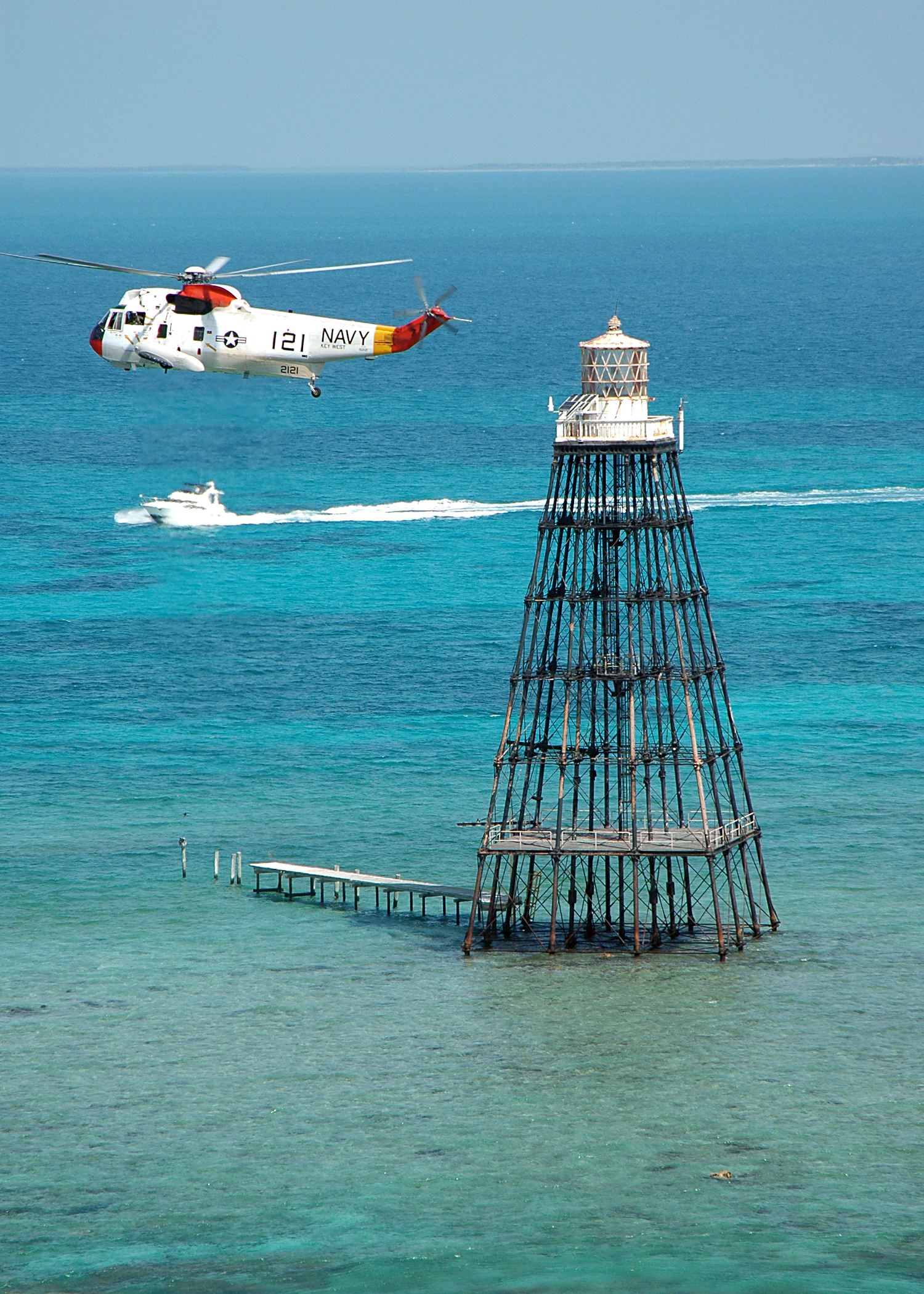
Sand Key Light sits between two channels that lead into Key West, about six nautical miles south of the Southernmost Hotel on Duval Street. The light and its tower are the only part of Sand Key that you can really see; the rest is just below the surface. It was not far from the light that we stopped and prepared to dive.

Now there was  flurry of activity between the long white benches that ran along the sides of the boat. Divers were donning wet suits, fins, and masks; instructors were loading vests with lead weights and mating regulators to air tanks; deck hands were setting lines.

I put my wet suit on backward. Lana noticed.  I laughed nervously and took it off, smelling the faint stale odor from the last person who used it. Then I slipped my feet into giant rubber fins, strapped the mask to my face, sat down in front of my tank, and wriggled into the shoulder straps of the buoyancy compensator. All the while, the boat heaved in the choppy waves.

Once everything was fastened, it was time to stand up and walk to the back of the boat. No tipping backward over the side, like Jacques Cousteau and his divers did on TV. That’s a technique for getting out of a boat that doesn’t have a walk-out platform. Standing up with an air tank on my back proved to be a challenge. I couldn’t even lean forward to begin the act of standing. Greg, the dive master for this trip, reached back and freed my tank from the large clip that held it to the side of the boat. Then he grabbed the tank and lifted as I stood up.

Standing on a boat in full diving gear, I began to understand what a fish must feel like when hauled out of its natural environment and on to a hard deck. I felt like a weighed a thousand pounds. I teetered as my legs strained to hold my top-heavy mass. I walked gingerly, clumsily to the back of the boat, Lana and Greg bracing me. Lana jumped in the water and turned to me.

“Just take the big step like they taught you,” Greg said.

But no one ever taught me the big step. I found out later there was a little bit of confusion about my experience level. Greg thought I was a student in pursuit of a diving certification. But I was a “resort”, and so only had an hour of pool experience. It didn’t matter now, though. It was time to get in the water. Lana shouted from the waves.

“Hold your mask with your hand and then take a big step off. Make sure you step far enough so that the tank doesn’t hit the platform.”

Still teetering under the weight of the tank, I stepped into the cold and overwhelming sea. Splashing down, I took a breath through the regulator in my mouth. I didn’t realize it at the time, but the water was cold. The first touch through my wet suit was a shock and I immediately began hyperventilating. I pulled the mouthpiece out and gasped at the sky. My lungs were pumping furiously and I couldn’t control them. Lana called to me and asked if I was OK. I couldn’t answer because I couldn’t talk. I gave her the “OK” sign but she kept asking.  I don’t think she believed me, and rightfully so.

Soon my breathing slowed, my body dispersed the shock and compensated for the cold. The waves were chaotic, breaking over my head and making me cough. I looked to the sky, felt the sun on my face, and calmed myself. I put the regulator back in my mouth, bit down, and took a lungful of air. I looked at Lana and gave her the “OK” sign — for real this time.

I took hold of the tag line, a rope runs from the back of the boat to a brightly colored float 85 feet away. Twenty feet from the boat, a weighted rope hangs from the tag line and goes to the bottom. I swam along the tag line toward Lana, who was waiting for me.

“Follow me and hold onto the down line. It’s about fifteen feet deep here.”

With a turn and a flip, she was gone. I tried to follow but I couldn’t. I bent at the waist, put my head down, and tried to dive. Instead, I just flapped on the surface like a dying tuna. I pressed the white button to let all the air out of my BC, but I still couldn’t descend. I grabbed the down line and tried to pull myself down. I saw Lana coming back up from the murky green depths. I pulled and pulled until a shiny silver chunk of metal appeared in my hands. It was the weight at the end of the line.

“You need more weight,” Lana said. “Let’s go back to the boat.”

I pressed the red button to inflate my vest a little and swam clumsily back to the dive platform. Greg handed small gray slabs of metal down to Lana and she tucked them into the side pockets of my vest.

“There,” she said.  “Let’s try that.”

We swam back to the down line and I gave Lana the OK signal.  She disappeared beneath the waves again. I pressed the white button to deflate the vest, stuck my head beneath the surface, and drifted effortlessly downward.

My breathing was hurried and erratic, typical for a rookie. I couldn’t see but I knew I was descending. My eardrums flexed inward as if a vise was slowly closing on my head. I pinched the rubber nose seal of my mask and forced air into my sinuses and felt the satisfying pop of equalized pressure. As I continued down into the gloom, a faint claustrophobic fear gently embraced me.

Exhaled bubbles roared past my head. It was noisier than I imagined it would be. That was another aspect of diving that wasn’t conveyed by the Jacques Cousteau TV shows. Pops, clicks, squeals, and the periodic hiss and thunder of my regulator. The visibility was so bad I couldn’t tell if I was moving or not. White grains of sea dust floated all around me. I was in a noisy snow globe filled with dirty green mouthwash.

Then I saw the white sand bottom and Lana. I was glad because I didn’t want to go any deeper. The surface was life and I didn’t want to get too far from it. I clumsily stopped and wriggled into an upright position with my knees in the soft sand. I pressed the red button to put some air into my BC and floated free. Lana gave me the OK signal and I returned it. She turned and swam away slowly and gracefully.

Diving in the mouthwash off Key West

I was still holding onto the rope and trying to get myself settled in this new world. But Lana was slipping away from me and I knew that I’d lose sight of her quickly. As I swam tentatively after her, I still had the down line in my hand. It was my last connection to the surface, to safety, to life. I remember not wanting to let go of Mom’s hand on the first day of school. The choice was to die pursuing Lana or die here alone with the line, so I let go and swam.

I swam closely above and behind Lana and knew what it felt like again to be an infant. I wouldn’t let her get more than a few feet from me. I would have attached myself like a remora if I could have. We came upon a large rope as thick as my forearm anchored to the bottom. It was the line holding the mooring buoy that the boat was tied to. Lana pointed to it enthusiastically as a tour guide would, happy to be seeing something — anything — in these poor conditions.

My breathing was slowing a bit and I focused on buoyancy and accurate swimming. The weight of the tank, the huge fins, the tendency to overuse the arms, all of these things get in the way of normal swimming. I tried to become more fish-like and rely on my “tail” to move me through the water. As we entered the shallower water around the coral, I struggled to stay above the bottom.  Everyone knows you’re not supposed to touch the coral, but I couldn’t help laying a hand down to steady myself. Lana wagged her finger at me. I couldn’t tell her that I didn’t mean to. No matter how much I played with the buttons on the inflator hose, I just couldn’t seem to get it right. The swimming pool didn’t have waves.
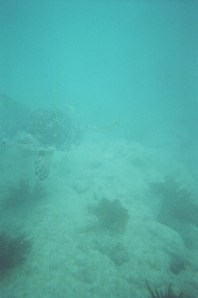
The sights were amazing, but between the murky water and my growing discomfort, they were difficult to enjoy. We saw a large spherical brain coral which seemed to draw me in like a magnet. I probably killed it by pushing off with my hand. A little further on, a sea turtle emerged from the mist and swam gracefully away. But he swam toward shallow water so we turned back.

We swam over the edge of a small ridge in the coral and then down, hugging the reef to our left. My mouth was getting very dry and I was still fighting the occasional surge of panic; I felt like ripping the regulator out so that I could breathe normally. Then I began to lose my equilibrium again. The wall of coral was disorienting my sense direction and I began to feel tired. Lana turned to me and checked my status with the OK sign. I decided it was time to stop. I didn’t want to go on and risk making a mistake because of fatigue. I gave Lana the “surface” signal and we ascended.

On the surface, the sun was bright and the waves where chaotic. The dive boat was about 50 yards away, tossing on the end of the mooring line. Lana asked if I was OK. I said I was just a little tired and ready for a break. Swimming back to the boat was difficult. Lana told me kick from a sitting position with my back to the boat. Everything Lana did was so relaxed; she didn’t seem to expend any effort. I consider myself to be in good shape, but this was new and I was struggling.

Lana pulled away from me, knowing that Greg was keeping an eye out from the bow. When I finally reached the dive platform, I was exhausted. Greg helped to lift my tank up as I climbed the aluminum ladder. It was such a relief to shed the mass of steel and rubber strapped to my torso, to take the mask off and the wet suit. I felt light as a feather but could only sit like a lump on the bench and hang on. I couldn’t stop yawning.

The only thing I wanted was to maintain equilibrium and not get sick. I was extremely sleepy now and yawning constantly. After the others were aboard, Captain Steve moved the boat down the reef and everyone readied themselves with a second dive. I told Lana that I just wanted to sit. It was hard to watch everyone having fun, but I didn’t feel like I could handle another dive. One of the other divers was the father of a boy who was completing his certification class. The father hadn’t done any diving for a few years and had already bailed out; he didn’t make it 20 feet from the boat before turning back. He joined me on the bow where I sat by myself, my eyes fixed on Sand Key Light, trying to evade nausea.

“It’s been a long time since I dove but I wanted to do it with my son,” he said. “But I don’t know, man. Maybe when we get older we just can’t do it any more. I felt so uncomfortable out there”.

“It’s pretty rough today,” I said.

He was a nice guy, but I really didn’t feel like talking. I was fixed on the steel light tower that rose from the water to the southwest. All I wanted to do was not puke. Soon everyone was back on board and we were heading for the harbor. As the boat picked up speed, the tossing stopped and the boat skimmed smoothly over the chop. The wooziness subsided; I was feeling better. I love the special thrill that speed brings, even more so when it eases a dizzy head. As my mood lightened, I thought of trying again.

I met Lana, Greg, and Jacqui at a bar just off Duval street that night.  As we drank and relaxed, I began to tell Jacqui about the overwhelming feelings — mental and physical — that I experienced on the boat.

“It’s so cool to hear this,” she said.  “We, as instructors, need to know what’s happening.  We don’t get as much feedback as we’d like and we can’t improve the experience if students don’t tell us about theirs.”

Lana was sympathetic and encouraging.

“You need to come back,” she said.  “The conditions were really bad today. You’re good at this. You picked up everything so easily. Come back in July; the water is fantastic in the summer.”

I promised I’d go back and try again someday.  I know that the beautiful “Jacques Cousteau experience” is waiting for me, and I too can float weightless above a serene world of color and beauty.  Maybe the sea will welcome me next time.

A Rookie’s First Race Weekend

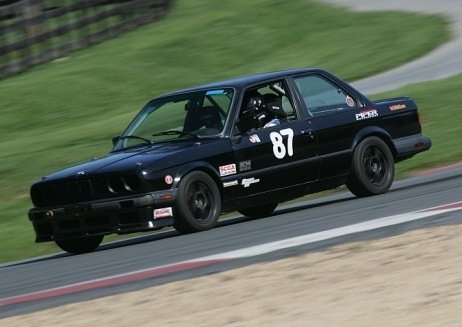
Over the last 3 years, I converted a 1987 BMW 325is from a beater that was barely drivable on the street into a dependable track car.  This car isn’t pretty, but the BMW E30 chassis is sturdy, the M20 engine is tough, and parts are relatively cheap.  It’s a great starter car and very fun to drive.  After many track events, it was time to step up to competitive driving and get my racing license.

My original goal was to take two SCCA racing schools in the spring and then run the Mid-Atlantic Road Racing Series (MARRS) in the E Production class. (This would be a phenomenally slow E Prod car but the goal was to race — not necessarily to win.)  I spent the late fall and entire winter making the car legal for racing.

To get one’s license with SCCA, two driver schools are required.  In my area, these are generally held in the early spring. Between finishing the car, testing it, and “teething” problems, it was early summer before I was ready to go. The SCCA schools were done and I missed them.

So, I decided the NASA GTS class was a good alternative; NASA puts on intense one-day schools throughout the year prior to a normal race weekend.  I signed up for the NASA Super Comp school-and-race weekend at Virginia International Raceway in July.  VIR is a wonderful track with good elevation changes and some very fast turns.  I’d driven it before so I didn’t have to worry about learning a new layout.

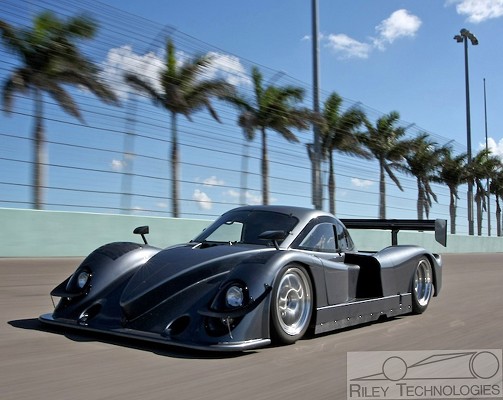
The Riley Technologies Mk XXII track carAfter a five-hour haul from Maryland, I arrived at the track on a warm Thursday night.  Lucky me!  I happened to set up in the paddock next to the Riley Technologies team and their 600 horsepower track day car, a beautiful streamlined missile of amazing speed and agility.  In addition to this wonderful car, the team brought winning professional driver Marc Goossens to compete in Friday’s Ultimate Track Car Challenge, an event that draws all kinds of interesting cars and teams to compete for fastest lap times and bragging rights.

After we discussed the fine art of auto racing, Marc asked if I’d take his place on Friday for the UTCC event. I told him I couldn’t because I was enrolled in comp school… OK, things didn’t quite happen that way. I never met Marc (but I did see him look longingly at my car) and, although I spoke to the crew, no one asked me to run their V8-powered Riley in the UTCC. Not even during practice. I was puzzled by that.

Back to reality. The school was really good. But they weren’t kidding when they said it would be a full day. I was absolutely whipped by the end of it. Half of my fatigue was due to things I didn’t plan for: the nerve-wracking way my hood behaved out on the straights, the oil leak, the difficulty in getting a window net up after buckling myself in… things like that. The other half came from learning to run three wide all the way around the track, practicing leap-frog passes, alternating lines, and trying to keep the speed up without hitting anyone. It was hectic.

Regarding the hood problem, it went something like this: As the car approached 180 MPH on the back straight — or was it 80? — the hood would float on the pins and then kink at the corners. I thought I had already fixed this problem after some shakedown runs at Summit a month before. There, I noticed that the hood bowed in the center at high speed. The car looked like a blue whale eating krill. I welded a length of half-inch square tubing across the nose of the hood and tightened the fit of the pins. That fixed the problem — at Summit Point.

At VIR, where the speeds are much higher, the wind simply went to work on the next-weakest area of the hood. To make matters worse, the front pins were loosening throughout the weekend. I was in a rush when I mounted them and had no prior experience, so that makes me a moron. Anyway, the hood tried to flip up at the corners on either side of the brace, making the car look like one of those cute cats with the tiny ears. During every lap, I expected the hood to fly into the sky like a roof shingle in an Arkansas tornado. The sheet metal was looking worse after each session and the pin mounts were starting to let go. Luckily, I brought the rivet kit with me.

So I’m going from track to classroom to track without a break all day, and there’s no one to work on the car while it sits. I really didn’t need this crap.

To add to the stress, the entire left side of my motor was soaked with oil and I couldn’t figure out where the hell it was coming from. I had to dump a quart of Redline in after every session. The  guys who sold racing supplies ran out of fifty-weight and were talking about setting up a pipeline to the refinery.

I had a pounding headache by the end of the day. After the instructors deliberated (for an eternity) over which students would be allowed to race, I was granted a provisional competition license. Yay! I was so excited that I went straight back to the hotel and went to bed.

The next day, I had Phil replace my trashed Toyo tires with a set of Hoosier R6’s. Phil rocks and so does his wife; they provide on-track service to racers up and down the East Coast and are passionate about racing.  So, I was ready to race. I think I missed the first practice (waiting for tires and trying to remedy the hood), but I was OK with that.

Somewhere between Friday and Saturday, an angel descended from heaven by the name of Roy Armstrong. Funny name for an angel, I thought, but I didn’t want to bring it up lest I invoke the wrath of The Racing Gods. Roy runs an H Prod Datsun 510 with SCCA but he happened to be at the track that weekend with a Mini in support of his wife and her first DE. He wandered over from time to time and asked if he could help. By the end of the weekend, he had taken on multiple roles including crew member, master fabricator, driving coach, mentor, and All Around Good Guy. I don’t think I could have done it without him.

I went out Saturday and qualified way back, trying to get a feel for the new rubber. The intent was to break the tires in gently but that idea went out the window like a gum wrapper after the second turn. There were cars everywhere and I was having a blast. I even passed a few. OK, they were usually limping to the pits or sitting by the side of the track in flames, but a pass is a pass.

After the session, I felt very privileged to finally join the guys who gather in front of the time sheets. I flagged SCCA for a few years and always wondered when I’d join those ranks. Wow! There’s my name… way down at the bottom. I’m a racer! Life was indeed fine.

Later that day, a dark storm began to brew on the horizon. Not the real horizon, but the one that has a BMW logo on it. My car was showing signs of imminent failure. Coming out of the famed Oak Tree corner in third gear, I felt the engine rev as if I was getting some wheel spin. Or the cheapo 4.10 differential I scored on eBay was letting go. Or (gulp) my brand new ClutchMasters Stage V clutch was slipping.

I drove the car gingerly for the rest of the session and returned to the paddock.  When I used the term “wheel spin” in front of my so-called “friends” in the paddock, they all busted out laughing.

“Buddy,” they cackled, “You’re not getting wheel spin from 145 horsepower in third gear. Not in this car.”

Fine, whatever. I had to agree. It was probably the clutch.

Time to line up for the Saturday race. Oh. My. God. This is it! Roy had already scouted the grid and told me that the top cars were positioned under the canopy. If you’ve seen the grid at VIR, you know that there is a finite number of spaces available for cars to line up side by side under a large canopy. Any cars not qualifying high enough have to sit in the open and wait for the pace lap.

I’d never gridded before so I was nervous. Roy said he’d meet me up there. The first grid worker checked my number as I approached and looked me up on his sheet. I could see cars baking in the sun outside of the canopy. The worker looked quizzically at his sheet and then back at my car. He approached the window and shouted out a grid position — a numbered position under the canopy!

“Pull up ahead,” he said. “The next worker will tell you where to go.”

I pulled up past the other cars along the line next to the canopy. I found the last open space and the worker there centered me in the lane. I was in a nice shady spot next to an impressive looking BMW several years newer than mine.

“Oh shit,” I thought. “This is wrong. They made a mistake. What the hell am I doing here? That car next to me looks like it can do 700 miles an hour. That’s Scott Pruett inside! Or is it Bill Auberlen? I’m doomed!

Roy ducked his head in through the passenger window. “How ya doin’, buddy? Ready to go?” He walked around and opened the door, cinched my belts, knelt down beside me.

“Roy, why am I here?!”

He laughed and walked over to the grid worker standing near my car. Next thing I see, they’re laughing and joking around, relaxed as can be on a hot and breezy summer day in southern Virginia. When he came back, he said he didn’t know why I was here but whatever just get ready to race.

As it turned out, I was the only GTS2 car in the field. That meant I got lumped in with the Spec3 and GTS3 cars in the first wave of a split start. Second wave was Spec E30’s, 944’s, and whatever else they had back there. It didn’t matter that I qualified near the bottom of a 54 car field. I was going off in the first wave with the faster cars. I briefly considered jumping out of the car and running off into the woods.

After an interminable wait, we rolled onto the track, formed up behind the pace car, and proceeded around the track. When the green fell, I was beaming from ear to ear. Noise! Dust! The smell of rubber and brake pads! Chaos and confusion! We dove into T1 with what seemed like millimeters between us. This is what I lived for. This is what I loved so much about racing. And this time I’m out here doing it!

The race was clean. I stuck with one of the Spec3 cars for a while (another rookie — I could tell by the orange plate) but he eventually slipped away. Some time later, the sharp end of the Spec E30 field passed me. I found some more rookies and backmarkers to dice it up with. It would have been fun, but…

The slippage was getting worse, lap by lap. Eventually, I had to feather the throttle in second and third when exiting turns and I even had to lift when the revs got high in fourth. I simply couldn’t launch out of the corners any more. Speed was gone and I couldn’t really compete with anyone – even the other rookies slipped away from me. Dammit.

I was elated to finish and glad that I kept it clean, but the excitement soon morphed into dejection. Something was wrong with the clutch and I had a pretty good idea what it was: oil. All that oil coming from the breather pipe was slowly seeping into the bell housing and fouling the friction surfaces of the flywheel and clutch. I considered pulling the plug on the weekend so I could go fix the car. Why run Sunday? What if the clutch blows completely and takes my new aluminum flywheel with it? I should just pack up and go.

That’s when Roy offered some sage advice.

“You need to get through this. You’re here to complete your novice requirement. The goal is to get that race director’s signature in your log book. Just nurse the clutch, shift slow and clean to keep it cool, and make it to the finish line. Stay out of everyone’s way and do the best you can.”

Roy saw the big picture. He had some racing savvy. I was glad to have him around. Instead of being put off by every little problem, he had a can-do attitude. If we can fix it, we will. If we can’t, we’ll work around it. Stop crying, wipe off that mascara, smooth out your wrinkled dress, and get back to it.

Sunday brought more of the same but with one major Code Brown moment that I’ll never forget. It wasn’t a high-speed incident or a wreck. It was just, well.. intense. I started in the first wave again and, after one lousy lap, was clipping along through the Climbing Esses by myself. I checked my mirrors and saw the sharp end of the Spec E30 field coming on fast. Chris Cobetto and friends. “Uh oh,” I thought. “The timing might not be real good here…”

As we crested the rise into Oak Tree, a shit-storm of snarling M20 engines were all over me. It happened in the blink of an eye. Contrary to popular notion, I got off the line early and stayed inside so the leaders could get a fast exit onto the back straight. But the turn feeds into a bottle neck with a gigantic tree on the inside. Oh God! In those split seconds amid the bumper-to-bumper noise and smoke, I saw the corner worker’s eyebrows raise. He stepped back and I think he seriously considered climbing the tree.

I seriously considered screaming like a girl.

But I was a racer! And racers don’t quit. I looked straight into the turn and saw nothing but a wall of galvanized German steel between me and the apex. These guys are bumper to bumper and they’re not messing around. It was an act of faith to simply drive the car forward. I clipped the kerb, avoided the inside wall, gingerly got back on the gas, and blended into traffic.

Wow! No contact. No “F.U.” flags flying from the middle fingers of other drivers. They were gone and I was cruising down the vast back straight, feathering the throttle to save my clutch and pointing the mid-pack guys by.

I made it! If I can keep this clutch alive, I’m home free!

I took the checkered flag without further incident. The car was slow but I never held anyone up or created a hazard. Passing etiquette learned in non-competitive driving events was well applied here. When I exited the pit lane into the paddock, Roy was standing off to the side. A bottle of cold water landed in my lap. What a guy. After I got out of the car, he ran up and shook my hand. I didn’t quite understand why he was so excited.

“I am proud of you. I drove up to Oak Tree to watch the race. You handled that situation perfectly! You got off the line but you didn’t back out of it. You went through the corner without getting in anyone’s way.  Man, I gotta tell ya, I saw those guys coming and was thinking, oh shit! This could be bad! But you did it. I’m really proud of you!”

That felt good. Roy was genuinely pleased with my performance. I felt like Kerri Strug sticking the landing with a busted ankle… except I didn’t win an Olympic medal or anything quite so dramatic. Yet I somehow earned a stripe out of that mess.

At the end of the day, I took my logbook to the race director and got my signoff. All I needed was two more races to complete my rookie requirement. I got those some time later at a very wet, very cold race track in New Jersey.

That’s another story.

An Old Race Fan

This is a story I posted on forums.autosport.com back in June of 2004 (the forum was managed by AtlasF1 at the time, later purchased by Autosport).  I have cleaned up some typo’s here, but otherwise it remains the same.

You can see the original post and feedback from readers, if you’re interested.


I attended the 2004 US Formula One Grand Prix alone this year. I don’t mind traveling alone but I do miss having someone to talk to, especially a person who shares a passion for racing.

This year, I was lucky to be sitting in the stands with a gentleman named Ron Alexander, who has lived a few miles away from the fabled Indianapolis Motor Speedway since the late ’50s.  This was Ron’s first trip to a Formula One event. Except for the dismal EV response to Ralf Schumacher’s high-speed rendezvous with the wall on the main straight, Ron liked what he saw.

Ron had some great stories to tell about the 500, the Brickyard 400, and other events that he has attended around the country. I’m always fascinated by the people who can take you back forty or fifty years. I vaguely remembered watching races on television in the 60’s. Even in the 70’s racing was a crazy business. Drivers got killed with alarming regularity. Ron brought some of those stories to life.

“My wife hates racin’,” he told me.

“She does? Does she mind you coming to the races?” I asked.

“Oh yeah, she hates that too.  I always drink a few beers and she don’t like that.”

Ron is retired from the Allison Transmission plant just south of the track. We talked about the big Allison V-1710 engines that were used in so many early fighter aircraft during World War II. My father was stationed in London during World War II with the 351st Fighter Squadron so I grew up sharing his interest in “war birds”. I could tell Ron was proud of the company he worked for and I enjoyed asking him questions. We talked about racing, airplanes, retirement, pensions, politics, you name it.

Ron and I sat in the stands long after the races ended that day. I could have talked forever. I lost my dad to cancer in 2000, and I miss him. But sometimes it seems like he turns up in the form of guys like Ron. Affable, small-town guys with a touch of southern “twang” in their voices (Pop was born in Alabama but moved to Wisconsin as a boy). They seem only too happy to just sit and shoot the breeze. I find myself very comfortable with guys like Ron and I feel very respectful toward them.

We were soon asked to clear out. I told Ron that my parking pass had flown out the window during a spirited drive on the freeway after qualifying the day before, and that I was forced to park a half-mile from the track. I was proud that I had found a spot for free that close.

“Did you park down by a big brick wall to the south?”

I said yes, it was a great big place that spanned the road – some kind of plant.

“That’s the Allison plant! That’s where I worked. I parked down there, too. Some cop tried to get me to turn around but I showed him my building pass and he let me in. I’ve lived here too long, hell if I’m paying to park.”

As we walked to toward the gate, Ron went to duck into the bathroom. I reached out to shake his hand and told him how much I appreciated talking with him. I figured he probably wanted to be going home.

His mouth dropped open and he reluctantly shook my hand. “Well, I thought maybe I could show you around Gasoline Alley. You’re parked near me. I mean, it ain’t what it used to be but I thought you might like to see it. Some of the greatest names in racing got their start over there.”

I felt foolish for trying to break away. What’s the hurry? I was none too eager to embark on the 8 hour journey back to Maryland.

“That sounds great, Ron. I’ll wait here for you.”

We walked thru the main gate lot in the hot sun and Ron talked about the businesses that had come and gone on the south side of the track. When we got to Ron’s truck, he said, “Just hop in, I’ll drive you to your car and you can follow me. We’ll drive to Gasoline Alley and then I can lead you out to the freeway.”

The state police had blocked the road where my car was parked, but the crowds were long gone. Ron slowly cut around the road block — keeping an eye on the cop who was keeping an eye on him — and proceeded to my car. “It’s just another block to Gasoline Alley,” he said. Gee, I didn’t know I was parked anywhere near such a place. I thought Gasoline Alley was simply the name of the passageway between the pits and the garages at the track.

After finding our way around another road block, Ron escorted me slowly up the quiet wooded street. The street sign said Gasoline Alley, sure enough. All the shops are still there, high performance shops, parts, supplies. Most of the big names — names that a 41-year-old like me would recognize — are gone, but I still felt like I was driving through history. We drove up the street and then Ron looped around and turned into a parking lot. I pulled up next to him.

Ron apologized and said things had changed a lot. But you could still feel his enthusiasm. He said that the shop at the end of the street, called Beast Enterprises, is named for former engine builder and racer Bob East. “Bettenhausen had a shop over there,” Ron said. The list went on. “Lot of great names got started here. It’s close to the track, you know, and it’s just where everyone came – it was the center of the racing world.”

The street was silent. It was Sunday and nobody was around.  Just a gentle breeze on a warm race day afternoon. No tourists, no hot dog stands, no cameras. Just me and Ron.

And a street full of racing dreams.

He wrote on the back of a business card. “This is a card from my son’s car repair business but I’ll write my address and phone number on the back. You gonna be here next year? I can tell you some places to stay that are a lot closer to the track. Or if you need anything else, just gimme a call.”

I thanked Ron, told him I’d be back and that I’d give him a call. He gave me directions to the freeway but said he’d lead the way. When we were a half block from the ramp, he motioned for me to move to the left lane for the eastbound entrance. He was going west. We waved to one another and went our separate ways.

Thanks, Ron.  Hope to see you next year at Indy.